

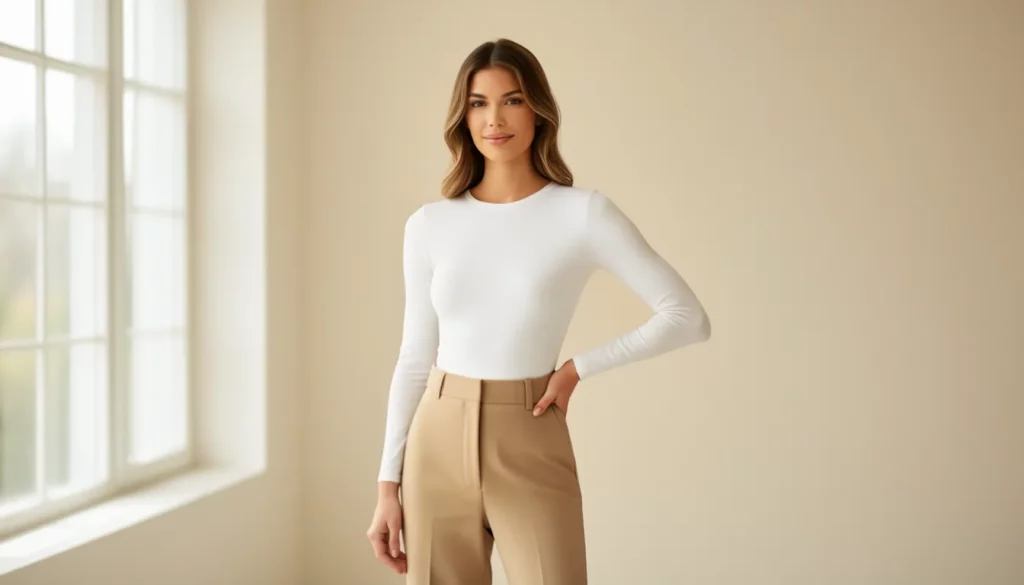
A bodysuit is a one-piece garment that covers the torso and fastens between the legs, so it wears like a fitted top that never rides up and never needs re-tucking. That single design idea — a top and its own anchor built into one piece — is why a good bodysuit looks so clean under a waistband, and it is also why the wrong one can feel like a small daily argument with your own clothes. The difference between the two comes down to a handful of decisions you make before you buy: fabric, neckline, sleeve, bottom cut, closure, and how the piece is sized.
We make and grade these pieces ourselves, so this guide is written from the cutting table rather than from a spec sheet. We will tell you where fashion bodysuits genuinely earn their place in a wardrobe, where a plain top is the smarter buy, and which details quietly decide whether a bodysuit becomes a favourite or lives at the back of a drawer. Use it as a framework you can carry across brands — once you know what to look at, you stop memorising one label’s quirks and start reading any bodysuit on sight.
What a bodysuit actually is — and when it beats a normal top
A bodysuit is a torso garment that extends past the hips and closes at the gusset, usually with a row of hook-and-eye fasteners or snap studs. Functionally it behaves like a fitted top with built-in underwear: the hem cannot untuck, the neckline sits where it was cut to sit, and the silhouette stays smooth from shoulder to waistband all day. That is the whole promise, and it is worth being honest about when it matters and when it does not.
A bodysuit earns its keep in three situations. First, under anything high-waisted — tailored trousers, a pencil skirt, wide-leg denim — where a normal top would bunch at the waistband; the bodysuit gives you one clean line instead. Second, when you want a defined, uninterrupted silhouette for a photo, an event, or simply a look you feel put-together in. Third, as a reliable layering base under blazers, cardigans and slip dresses, because nothing shifts underneath. Outside those cases — a relaxed day at home, heavy physical work, a long flight where bathroom trips should be effortless — an ordinary top is often the more practical choice, and we would rather say so than pretend the bodysuit wins every time.
One more distinction matters before you shop, because it is the single biggest source of confusion online. A fashion bodysuit is a garment first — chosen for fabric, neckline and how it looks worn out. A shapewear bodysuit is compression first, built to smooth and hold, often in dense power-mesh with firm panels. Much of what you will read about “choosing a bodysuit” is quietly written about shapewear, which is why the advice skews toward compression levels and tummy control. This guide is about fashion bodysuits — the kind you wear as the top, not under one — so the priorities are different: breathability, drape, neckline and honest fit rather than how many levels of squeeze you want. If you are weighing the two categories against each other, our full comparison of fashion and shapewear bodysuits goes through the fabric science, the construction differences and which one to buy for which outcome.
Start with use case, not colour: the fit-logic framework
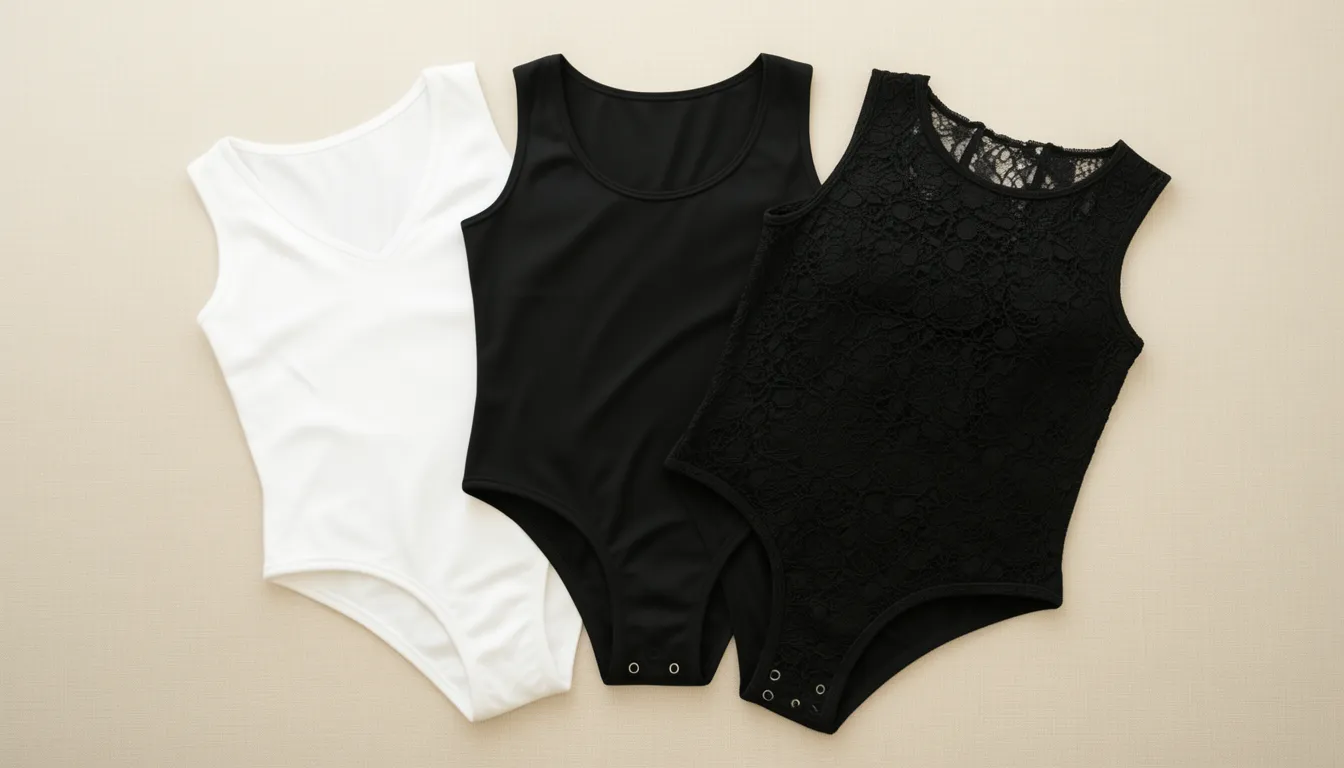
The fastest way to choose the right bodysuit is to decide what job it has to do before you look at a single product photo. Almost every fit disappointment we hear about traces back to a piece bought for how it looked on screen rather than for where it would actually be worn. So we grade our own range against five questions, and you can run any bodysuit — ours or anyone’s — through the same five before you commit.
- Where will it live? Everyday base, workwear, or going-out. This one answer already narrows fabric and neckline more than anything else.
- What goes over it — or nothing? A layering base can be plainer and thinner; a piece worn on its own needs a neckline and fabric that hold up to being seen.
- How much support do you need up top? This decides whether you want a built-in shelf or moulded cups, or whether you will wear your own bra — and that in turn drives the neckline.
- How often will you need the bathroom in it? An honest question that closure type answers. A row of hooks is quick; a single low snap is not.
- What is your torso length, not just your dress size? Bodysuits are the one garment where a long or short torso is felt immediately, because the fabric has to span from shoulder to gusset.
Work down that list and the rest of this guide falls into place: the fabric section answers question one and two, the support and neckline sections answer question three, the closure section answers question four, and the sizing section answers question five. Nothing here is complicated — it just rewards deciding in that order instead of falling for a colour first.
Fabric: the decision that sets everything else
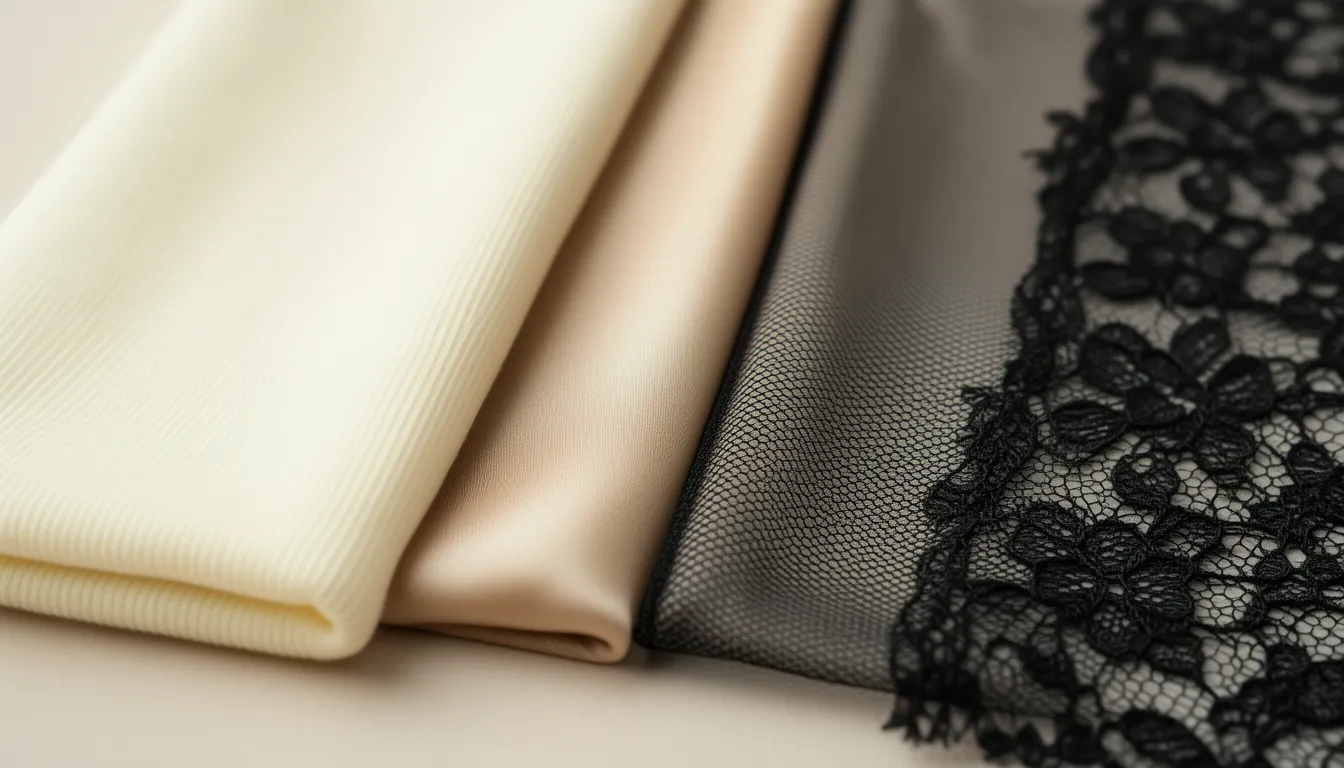
Fabric is the first real choice because it governs comfort, breathability, how the piece drapes, and how honestly it can be worn on its own versus under something. In a fashion bodysuit you are really choosing between four families — cotton blends, microfibre, mesh and lace — plus the small percentage of elastane that runs through all of them and does most of the work you feel.
That elastane is worth understanding, because it explains why a bodysuit can hug the body and still move with you. Cotton fibre itself barely stretches — its elongation at break sits at roughly 5.6–8% — whereas elastane (spandex) can extend by 400–700% before it fails, according to textile tensile-testing data. Blend even a few per cent of elastane through a cotton knit and the whole fabric gains that give and, crucially, the recovery to snap back to shape after wear and washing. A bodysuit with good recovery keeps its neckline and leg openings crisp; one with poor recovery sags at the neck and gapes at the legs within a season. When we grade our cotton pieces, that recovery is exactly what the elastane content is there to protect.
Cotton blend — the everyday default
A cotton-blend bodysuit is the one most people should own first. Cotton breathes, it absorbs moisture into the fibre — cotton’s moisture regain is around 8–9%, which is why it feels drier against warm skin than a pure synthetic — and it is soft enough for all-day, everyday wear. The elastane blended in gives the stretch; the cotton gives the comfort and the breathability. For a base layer under knitwear, a workwear staple under a blazer, or simply a clean top with jeans, this is the honest workhorse.
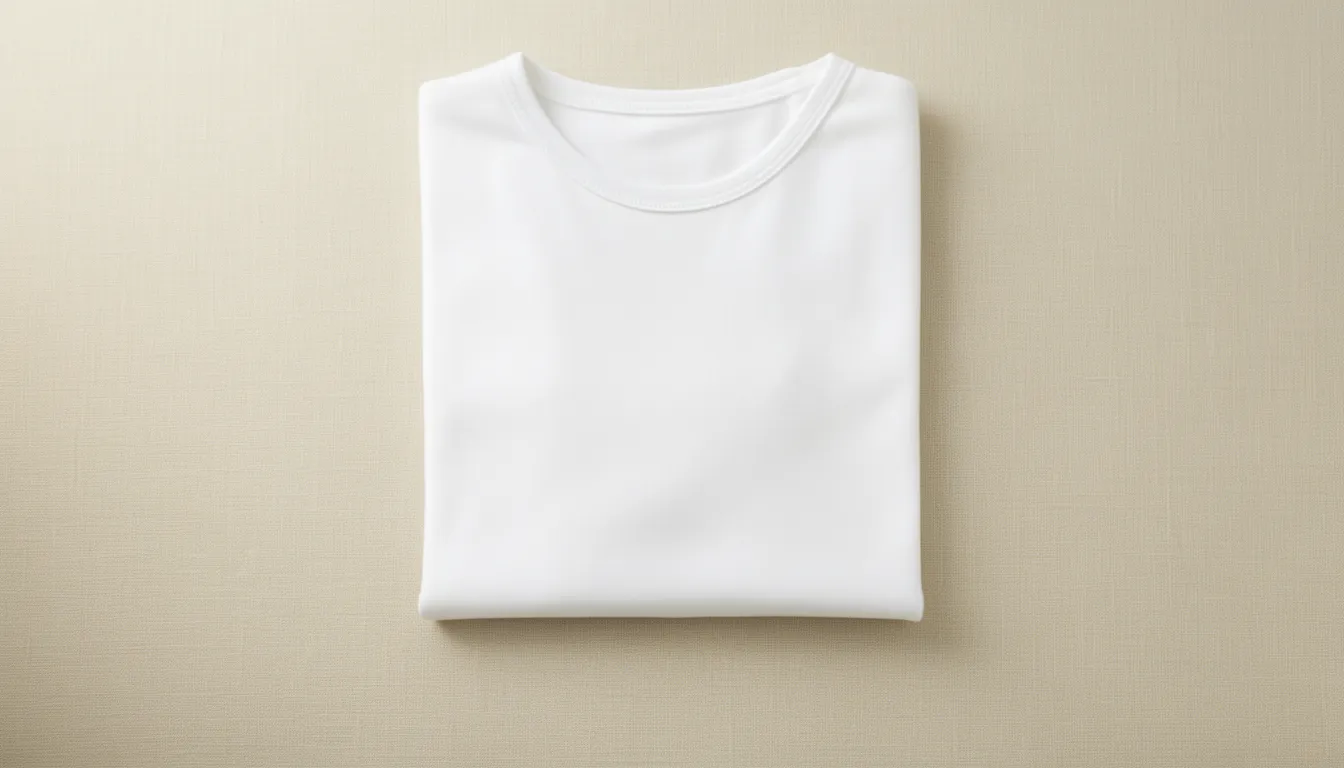
The trade-off is that a plain cotton bodysuit is the least “dressy” of the four — it is quietly good rather than eye-catching. If you want one piece to do the most jobs, though, a cotton style like our cotton V-neck shirt bodysuit with long sleeves is where we would start most wardrobes: it runs from XS through 3XL, which is a genuinely broad grade for this category, and the shirt-style V-neck reads as smart-casual under a jacket without looking like underwear. For a warmer-weather or under-everything version, the sleeveless racerback scoop-neck bodysuit does the same job with bare arms and comes in fifteen colours, so it is the easy one to buy in a neutral and then again in a colour you actually wear.
Microfibre — the invisible layer
Microfibre (a fine polyamide-elastane knit) is the choice when the priority is a smooth, seamless finish under close-fitting clothes. It is thinner and more slippery than cotton, sits flat under a fitted dress, and shows almost no texture through the outer layer. It also dries quickly and holds colour well. The honest limitation is breathability: a dense synthetic traps more heat and moisture than cotton, so for long, warm days or if your skin runs sensitive, it is less forgiving than a cotton knit. Our own rule of thumb: microfibre for the sleek, invisible look under a specific outfit; cotton for the piece you live in.
Mesh — sheer, structured, going-out
Mesh is a going-out fabric. It is sheer or semi-sheer, holds its shape better than you would expect for something so light, and layers beautifully — over a bralette, under a blazer, or on its own for an evening look. A style like our wide-strap mesh bodysuit with a thong cut is built for exactly that: the wide straps keep it wearable without a fiddly strapless bra, and the thong bottom keeps the line clean under a fitted skirt. Just be clear-eyed about what mesh is — it is deliberately revealing and it is not an all-day base layer. Buy it for the occasions it is made for and it never disappoints; buy it expecting a T-shirt substitute and it will.
Lace — the occasion piece
Lace is the most decorative option and the one people most often buy for a specific evening, a date, or to layer under a sheer top or open blazer. An all-lace style such as our black all-lace mock-neck bodysuit with long sleeves carries a whole outfit on its own. Two honest notes from the workroom. First, lace styles are almost always cut in a narrower size run than cotton — the stretch and structure of the lace we use behaves best across a tighter band of sizes, so if you love a lace piece, buy your size promptly rather than assuming it will restock in every grade. Second, see the gusset note below: lace and mesh look wonderful, but the part that touches you should still be lined in cotton, and a well-made piece is.
Fabric at a glance
| Fabric | Breathability | Best for | Worn on its own? | Watch-out |
|---|---|---|---|---|
| Cotton blend | High | Everyday, workwear, layering base | Yes, casual | Least “dressy” of the four |
| Microfibre | Low–medium | Seamless look under fitted clothes | Usually as a base | Traps heat on warm days |
| Mesh | High (sheer) | Going out, layering, evening | Yes, statement | Sheer — not a day base |
| Lace | Medium (open) | Occasions, dates, layering | Yes, decorative | Narrower size runs; needs cotton gusset |
Neckline: pick it for your outfit and your bra
The neckline is the part of a bodysuit everyone sees, so it is tempting to choose it purely on looks. The better approach is to choose it for two things at once: the outfit it will sit under or beside, and the bra you intend to wear with it. A neckline you have to keep adjusting because it fights your bra straps is a comfort mismatch you will feel every hour — the goal is a neckline you stop thinking about. This works far better when the bra underneath actually fits, so if you have not checked recently, our guide to measuring your bra size at home is worth five minutes first.
- Scoop neck — the versatile default. Open enough to feel relaxed, high enough to wear a normal bra without the straps showing much. Our go-to for an everyday base.
- V-neck — lengthens the torso and is widely flattering on a fuller bust because it opens the chest rather than cutting straight across it. Reads smart under a blazer.
- Mock neck — the polished, cooler-weather choice. Frames the face, layers cleanly under knitwear, and pairs neatly with a strapless or T-shirt bra since nothing shows at the chest.
- Square neck — a quietly modern look that suits straight and broad shoulders and gives a clean horizontal line under an open jacket.
The bra rule that saves the most grief: match the bra to the neckline before you buy, not after. A mock neck like our cotton mock-neck long-sleeve bodysuit hides everything at the chest, so a plain T-shirt bra or a strapless works perfectly. A deeper V needs either a plunge bra or a bodysuit with built-in cups. A racerback style needs a racerback or convertible bra, or a built-in shelf, or it simply will not work with standard straps — which is exactly why the racerback pieces we cut so often come with their own support built in.
Sleeve and season: buy for when you’ll actually wear it
Sleeve length is the most seasonal decision on the list, and the one people most often get slightly wrong by buying the pretty long-sleeve piece in the middle of summer. Sleeveless and short-sleeve styles peak spring to summer and as warm-weather layering; long-sleeve and mock-neck styles come into their own from autumn through winter, where they are unbeatable as a slim, non-bulky base under knitwear and coats. A long-sleeve cotton bodysuit under a chunky jumper gives you warmth with none of the bulk of a second shirt, and because it cannot untuck, the layer stays flat all day.
If you are building from scratch, the sensible order is one sleeveless or short-sleeve cotton piece for the warm half of the year and one long-sleeve or mock-neck piece for the cold half. Those two cover the vast majority of real wardrobes before you ever get to the decorative lace or mesh options. You can browse the full range across seasons in our bodysuits collection, where the sleeve and neckline filters do most of the narrowing for you.
Bottom cut and the closure: the parts nobody photographs
The two features that decide day-to-day comfort are the ones that never appear in the product shot: the bottom cut and the gusset closure. Get these right and the bodysuit disappears into your day; get them wrong and you notice the piece constantly.
Bottom cut
Most fashion bodysuits are cut with either a thong, a brief/bikini, or a Brazilian bottom. The thong cut is the one to choose when your priority is no visible panty line under fitted trousers or a clingy skirt — it is the smoothest line, at the cost of being a thong, which not everyone wants for all-day wear. The brief or bikini cut gives more coverage and is the easy everyday pick; it is the one we would suggest if you are unsure. The Brazilian sits between the two — moderate rear coverage with a clean line. There is no “best” here, only a match to what you find comfortable and what you are wearing over it. If you live in leggings and hate a visible line, go thong; if you want a bodysuit you forget you have on, go brief.
The gusset closure
Underneath, a bodysuit closes at the gusset one of a few ways, and it genuinely affects your day. A row of hook-and-eye fasteners — the closure we use across most of our range — is secure, adjusts to a little length variation, and is quick enough for normal bathroom trips. Snap studs are lightweight and simple but vary in quality: cheap snaps pop open at the worst moment, so this is a place where construction quality matters more than the marketing. A few styles are pull-on with no closure at all — the cleanest possible line, but the least convenient when you need the loo. Match the closure to question four of the framework: if you will be in and out of the bathroom often, favour hooks over a single snap or a pull-on.
Two construction details separate a comfortable bodysuit from an irritating one, and both are easy to check. Flat or bonded seams reduce chafing and stay invisible under clothes, where bulky overlocked seams can rub and show. And the gusset should be lined in cotton whatever the outer fabric is — this is the one point where the medical consensus is genuinely uniform: dermatologists and gynaecologists overwhelmingly recommend a cotton crotch lining for breathability and moisture management, even when the rest of the garment is lace, mesh or microfibre. A well-made lace or mesh bodysuit respects that; a poorly made one skips it. It is worth a ten-second look before you buy.
Do you need built-in support?
Bust support in a bodysuit comes in three levels, and matching it to your needs saves you from either wrestling with a bra under a backless neckline or feeling unsupported in a piece that assumed you would wear one. No built-in support is normal and correct for most cotton and everyday styles — you wear your own bra, chosen to match the neckline. A built-in shelf or lightly padded cups give modesty and shape for lower-support days and are ideal under a racerback or a neckline that fights normal straps. Moulded cups — as on our moulded-cup lace bodysuit — give real shape and let you wear a revealing neckline braless with confidence, which is exactly why they tend to appear on occasion pieces.
The honest guidance: a fuller bust that wants genuine lift for all-day wear is usually better served by a supportive everyday bra under a plain bodysuit than by a light built-in shelf, which is designed for shape rather than serious support. Reserve the moulded-cup styles for the outfits — backless, deep-V, strapless — where an external bra simply is not an option. Choose support for the neckline you cannot otherwise solve, not as a substitute for the bra you already own and trust.
Getting the size right (and why torso length matters most)
Sizing is where a bodysuit either becomes a favourite or a return, because it has to fit in two directions at once: around the body and along the torso. A bodysuit can be perfect on your bust and hips and still be wrong if the length between shoulder and gusset does not match your torso — too short and it pulls down at the neckline and up at the gusset; too long and it sags at the front. This is the one measurement people forget, and it is the one that matters most in this garment specifically.
Our practical method:
- Measure three points against a tape: bust (fullest part), waist (narrowest), and hips (fullest). Do it over close-fitting underwear, not over clothes.
- Check torso length if you know you are long or short in the body — measure from the top of your shoulder, down the front, through the legs, and up to the same shoulder at the back. If a brand gives a torso measurement, this is where it earns its place.
- Read the actual size chart for the specific piece rather than trusting your usual dress size. Cuts and fabrics grade differently, and lace runs to a narrower band than cotton.
- If you are between sizes, let the fabric decide. A stretchy cotton-elastane or microfibre knit will happily take the larger of two sizes and stay smooth; a firmer or more structured piece is better sized down for support.
A word on our sizing specifically, because it removes a common source of error for an international shop: many of our pieces carry triple sizing — the EU number, the US/bra equivalent, and the letter size together (for example, a cup-sized piece may read 36B | 80B | L). That means you do not have to convert in your head or guess whether an “L” is cut to a European or American idea of large — the three systems are printed against each other so you can match whichever you know. When a piece uses letter sizing (XS–3XL), use your measured bust and hip against that item’s chart rather than assuming your outerwear size carries over.
Finally, a fit-feel check once it arrives: a bodysuit should feel snug but never constricting, the neckline should sit flat without gaping, the leg openings should lie smooth without cutting in, and when you raise your arms overhead the whole piece should move with you and settle back — not ride up and stay there. That last test is really a recovery test, and it is the quickest way to judge whether a fabric was well made.
Who a bodysuit is right for — and who should skip it
Because we would rather you buy the right thing once than the wrong thing twice, here is the honest split.
A bodysuit is a great buy if you…
- Wear a lot of high-waisted trousers, skirts or jeans and are tired of tops bunching at the waistband.
- Want a clean, defined silhouette for work, events or layering, with nothing shifting underneath.
- Layer under blazers, cardigans or slip dresses and want a slim base that stays put.
- Like the idea of one piece that reads as top and underwear in one, cutting a step out of getting dressed.
Think twice — or choose carefully — if you…
- Need the bathroom frequently and find any closure a nuisance — a bodysuit adds a step every time; if you still want one, insist on a hook-and-eye row over a single snap.
- Have a very long or very short torso and cannot check a torso measurement — fit will be hit-and-miss without it.
- Run warm or have reactive skin and were eyeing a dense microfibre for all-day wear — choose breathable cotton instead, or accept it as an occasional piece.
- Want serious all-day bust support — pair a plain bodysuit with your trusted bra rather than relying on a light built-in shelf.
None of these are reasons the garment is bad — they are simply cases where either a specific feature or a plain top serves you better. Knowing which camp you are in is most of the decision.
The five mistakes we see most often
After years of fitting these pieces and reading customer feedback, the same handful of missteps come up again and again. None of them are about taste — they are about buying against how a bodysuit actually behaves. Avoid these five and most fit problems never happen.
Buying the neckline without the bra in mind. The most common one by far. A gorgeous racerback or deep-V arrives, and there is no bra in the drawer that works with it. Decide the bra-and-neckline pairing together, or choose a built-in-support style, before you buy — not after it lands.
Treating a summer-pretty long-sleeve as a year-round buy. Sleeve length is seasonal. A long-sleeve mock-neck is superb from autumn to spring and barely leaves the drawer in July. Buy the sleeve for the months you will wear it.
Ignoring torso length. Two people with the same bust and hips can need different bodysuit lengths. If a piece pulls uncomfortably at the gusset or gapes at the neck, torso length — not your dress size — is usually the culprit. Check it whenever a brand provides the measurement.
Choosing dense microfibre for all-day summer wear. Microfibre is brilliant for a seamless line under a specific outfit, but a dense synthetic traps heat. For the piece you wear from morning to night in warm weather, breathable cotton is kinder to your skin.
Assuming a light shelf equals a bra. A built-in shelf gives shape and modesty, not serious lift. If you want genuine all-day support, wear your own bra under a plain style and save the moulded-cup pieces for backless and strapless outfits where a bra is impossible.
How to style the one you choose
Once you have the right piece, the styling is refreshingly simple, because the whole point of a bodysuit is that it does the “tucked-in” work for you. A few reliable pairings:
- With high-waisted jeans — a scoop or V-neck cotton bodysuit gives you the clean, tucked look with none of the bunching. This is the everyday uniform a cotton piece was made for.
- Under a blazer for work — a mock-neck or shirt-style V-neck reads polished and stays flat all day, so you get the sharp line of a tucked blouse without re-tucking every time you sit down.
- With tailored trousers or a pencil skirt — a thong-cut bodysuit keeps the line seamless where a normal top would show at the waistband.
- For the evening — a lace or mesh bodysuit with a high-waisted skirt or wide-leg trousers is a complete outfit on its own; add a blazer to take it from dinner to somewhere smarter.
- As a layering base — under a slip dress, a sheer top or an open cardigan, where a plainer cotton or a decorative lace both work depending on how much you want to show.
A last practical note that protects your investment: fashion bodysuits reward gentle care. The elastane that gives them their stretch and recovery is happiest hand-washed or run cool on a delicate cycle and dried flat in the shade — high heat is what eventually kills the recovery and leaves a neckline slack. Treated kindly, a good cotton bodysuit stays crisp for years; treated like a gym T-shirt, even a well-made one tires early.
A simple buying checklist
Before you check out, run the piece past these six points. If it clears all six for your use case, it is very likely the right bodysuit for you.
- Use case set first — you know whether this is an everyday base, a workwear piece or a going-out style, and the fabric matches.
- Neckline matches your bra — or the piece has built-in support that removes the bra question.
- Sleeve suits the season you will actually wear it in.
- Bottom cut matches your comfort and outfit — thong for no lines, brief for forget-it-all-day.
- Closure suits your day — hook-and-eye for convenience and security; check snap quality; pull-on only if the loo is not a concern.
- Sized on the item’s own chart, with torso length considered, and the gusset lined in cotton.
Two well-chosen bodysuits — one cotton everyday piece in your best neutral and one occasion piece in lace or mesh — will out-earn a drawer full of impulse buys. Start there, wear them, and you will quickly learn which second neutral or which colour you actually reach for. Once they arrive, our guide to how to wear a bodysuit covers twenty ways to style them across casual, work and evening.
Bodysuit buying questions, answered
How should a bodysuit fit?
Snug but never constricting. The neckline should sit flat without gaping, the leg openings should lie smooth without cutting in, and when you raise your arms overhead the whole piece should move with you and settle back rather than ride up and stay there. That last check is really a test of the fabric's recovery, and it is the quickest way to judge whether a bodysuit is well made.
What do you wear under a bodysuit?
A bra chosen to match the neckline, plus nothing extra on the bottom — the built-in gusset is your underwear. Match the bra to the neckline before you buy: a mock or scoop neck takes a normal or T-shirt bra, a deep V needs a plunge, and a racerback needs a racerback or convertible bra (or a style with built-in support). For a fully bare look under a backless or strapless outfit, choose a moulded-cup bodysuit instead.
Is a fashion bodysuit the same as shapewear?
No. A fashion bodysuit is chosen first for fabric, neckline and how it looks worn as a top. Shapewear is compression-first, built to smooth and hold in dense power-mesh with firm panels. A lot of online advice about "choosing a bodysuit" is quietly about shapewear, which is why it fixates on compression levels. If you want a top, you want a fashion bodysuit; if you want firm shaping under another outfit, you want shapewear.
Which bodysuit fabric is most comfortable for everyday wear?
A cotton blend. Cotton breathes and absorbs moisture into the fibre, so it feels drier against warm skin than a dense synthetic, and the small amount of elastane blended in gives the stretch and recovery. Microfibre is smoother and more invisible under fitted clothes but traps more heat, so it suits a specific outfit better than an all-day base. Lace and mesh are occasion fabrics rather than daily ones.
How do I go to the bathroom in a bodysuit?
You unfasten the gusset closure between the legs, then re-fasten it afterwards. A row of hook-and-eye fasteners is quick and secure; a single snap or a pull-on style is less convenient. If you know you will be in and out of the bathroom often, choose a hook-and-eye closure — it is the practical difference between a bodysuit you enjoy and one that annoys you.
Should the gusset be cotton even if the bodysuit is lace or mesh?
Yes. Whatever the outer fabric, the part that touches you should be lined in cotton. Dermatologists and gynaecologists overwhelmingly recommend a cotton crotch lining for breathability and moisture management, and a well-made lace or mesh bodysuit includes one. It takes ten seconds to check before you buy.
What size bodysuit should I buy if I'm between sizes?
Let the fabric decide. A stretchy cotton-elastane or microfibre knit will happily take the larger of two sizes and stay smooth, while a firmer or more structured piece is usually better sized down for support. Always measure your bust, waist and hips and read the specific item's size chart rather than assuming your usual dress size — and if you are long or short in the torso, check the torso length, because that is the measurement that most often decides fit in a bodysuit.