


Two garments, one silhouette, two completely different jobs. A fashion bodysuit is a top that fastens between the legs. A shapewear bodysuit is a compression garment that happens to be shaped like one. On a product grid they look near-identical — same neckline options, same high-cut leg, same second-skin promise — and that is exactly why so many people end up with the wrong one in a parcel.
We should say plainly where we stand: we make and grade fashion bodysuits, and we do not sell shapewear. That means we have no reason to talk you into a shaper — and no excuse for being unfair about one either. So this guide is written to be useful even if you finish it and decide compression is what you need. What follows is the mechanical difference between the two (fabric power, panel construction, where the seams sit), what each does to your body across an eight-hour day, what clinicians actually flag about compression, and a straight answer on which to buy for which outcome. If you have already decided you want a fashion piece, our guide to how to choose the right bodysuit covers fabric, neckline and fit in more depth.
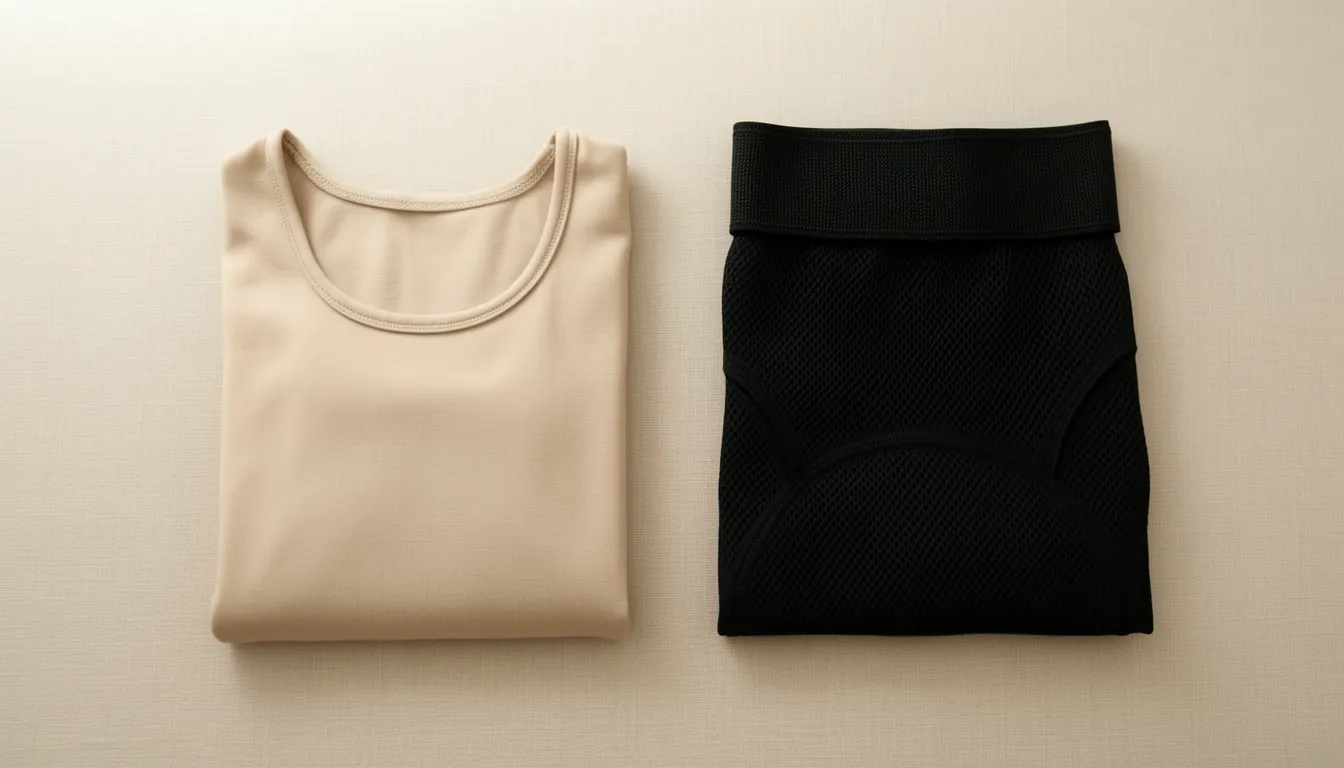
The short answer: same silhouette, opposite engineering
A fashion bodysuit is a torso-length top that fastens at the gusset, cut in a fashion knit — cotton blend, microfibre, mesh or lace — with roughly 5–12% elastane, and designed to look like clothing while staying permanently tucked. A shapewear bodysuit is an undergarment built from compression fabrics such as power mesh or powernet, typically 20% elastane or more and often doubled into zoned panels, designed to redistribute soft tissue and change your outline underneath clothes. The only thing the two categories genuinely share is the outline of the pattern. Everything else — fabric power, layer count, finishing, wear time, price logic — diverges.
| Fashion bodysuit | Shapewear bodysuit | |
|---|---|---|
| Primary job | Look like a top; stay tucked | Change your outline |
| Fabric | Cotton blend, microfibre, mesh, lace; roughly 5–12% elastane | Power mesh / powernet; 20–30%+ elastane |
| Layers | Usually one | Zoned; often doubled at tummy and waist |
| Worn as | Outerwear, or a base layer | Underwear, with rare exceptions |
| Realistic comfort window | All day | A few hours |
| Typical closure | Hook-and-eye row or snaps | Open or split gusset; two–three hook rows |
| Leg | Brief, bikini, Brazilian or thong | Often extended to mid-thigh |
| Price band | €22–35 (our range) | €25–90 typical retail |
| Buy it when | You want a clean outfit base you can wear every day | You want a visible silhouette change for a specific occasion |
If you are looking at a listing and cannot tell which you are being sold, five checks settle it in under a minute:
- Read the fibre content. This is the single most honest line on any label. Single-digit or low-teens elastane means fashion knit. Twenty per cent or more means the fabric is engineered to push back.
- Look for zoned panels. Visible seams that box off the abdomen or curve around the waist are control panels. A fashion bodysuit’s seams follow the body’s shape, not a shaping map.
- Check the gusset. An open or split gusset — no fastening at all — is a shapewear signature, because peeling a compression garment down in a bathroom is genuinely difficult.
- Check where the leg ends. Mid-thigh legs exist to compress thighs and stop the hem printing through a dress. No fashion bodysuit needs that.
- Look at the photography. If the garment is only ever shown under something, it was designed to be hidden.
What “compression” actually means — and why the shapewear label doesn’t measure it
Compression is a measurable pressure, expressed in millimetres of mercury (mmHg), and in medicine it is standardised. Under the German RAL quality standard used across the EU for medical compression stockings, class I applies 18–21 mmHg at the ankle, class II 23–32 mmHg, class III 34–46 mmHg and class IV at least 49 mmHg; the French AFNOR system runs on different bands, from 10–15 mmHg at class 1 up to 36 mmHg and above. Garments made for sport rather than therapy usually sit lower, around 5–15 mmHg. Those numbers exist because pressure has clinical consequences, so it gets specified, tested and certified against a documented class.
Now look at a shapewear label. You will find “light”, “firm”, “extra firm”, “sculpting” or “max control” — and no numbers at all. There is no cross-brand standard behind those words. One label’s firm is another’s medium, and a third brand’s “extra firm” may apply less pressure than either. This has a practical consequence that almost no shopping guide states outright: you cannot compare two shapewear bodysuits from different brands using their compression labels. The comparison is not merely difficult, it is meaningless. What you can compare is fibre content, panel construction and — after you have worn both — how your own body reports back.
What the fibre content tells you instead
Because the marketing words are unregulated, the fabric percentages become the real spec sheet. As a working rule across the compression-textile trade, fabrics built for light compression carry around 10–15% elastane; firm-compression fabrics move to 20% and above; and powernets used for waist cinchers and shaping panels can reach 30% or more. Fabric weight matters just as much as the percentage: power mesh around 100 GSM delivers moderate compression, while a heavy powernet at 200+ GSM delivers firm. Two garments can both say “85% polyamide, 15% elastane” and behave differently because one is knitted twice as dense.
Fashion knits sit well below all of that. The cotton-blend and microfibre jerseys we cut are engineered for comfort-stretch and recovery, not for force — enough elastane to follow you and spring back, not enough to hold you in. That difference is a property of the fibre, not a choice of ambition: elastane can stretch to somewhere between 400% and 700% of its own length and return, whereas a cotton fibre elongates only about 5.6–8% before it simply stops giving. Load a knit with elastane and you get a garment that pushes; keep the elastane low and you get a garment that drapes. Nobody can make a soft cotton bodysuit apply firm compression, and any listing claiming both is describing two different products.
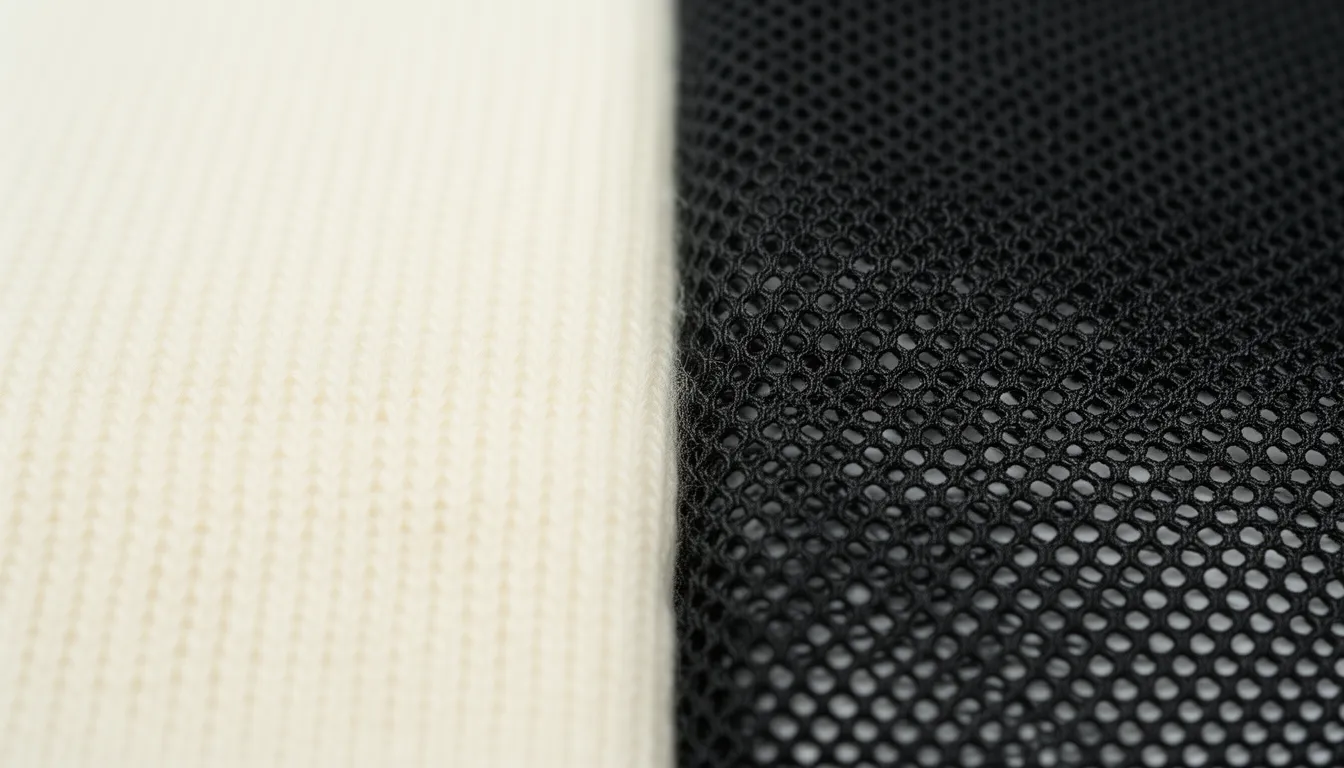
Inside the two garments: a construction walk-through
Construction is where the intent of a garment becomes visible: a fashion bodysuit is assembled like a top with a longer body, while a shapewear bodysuit is assembled like a piece of equipment, with panels, stays and grippers each solving a specific mechanical problem. The clearest way to see it is to turn both inside out, which is roughly what we do at the cutting table every week — and the problems the two categories are built to solve barely overlap.
What is inside a fashion bodysuit
- One layer of knit. Cut, sewn and graded like a top, with seams following the shoulder, side and armhole — the same construction logic as a well-made T-shirt with a longer body.
- Edges finished to be seen or to disappear. Necklines are bound or coverstitched for a clean visible edge; our microfibre pieces use bonded or laser-cut edges so nothing prints through a fitted outer layer.
- A fastening you can actually use. We put a hook-and-eye row at the gusset across most of the range, because a row of hooks is faster and more durable than a single snap, and it keeps the garment tucked without adding bulk.
- A cotton gusset panel. Standard on our pieces and the one construction detail gynaecologists consistently recommend, for breathability against the skin.
- Optional light support. A shelf, or moulded cups on occasion styles. Worth saying clearly: a built-in shelf is a convenience, not a substitute for a proper bra above a B cup.
- Grading by torso length as well as girth. The measurement that decides whether a bodysuit is comfortable is the distance from shoulder to gusset, which is why the same person can wear their normal size in one brand and need to go up in another.
What is inside a shapewear bodysuit
- Zoned compression. The abdomen is usually a double layer or a bonded panel; sides and back may be lighter power mesh so the garment is wearable at all.
- Anti-roll engineering. Flexible boning, plastic stays or a wide silicone-backed band at the waist — all there for one reason.
- Silicone grippers at the leg opening, because a compressed thigh wants to push the hem upward all day.
- An open or split gusset, not a fastening — the practical concession to the fact that the garment is hard to remove.
- Convertible or removable straps and a built-in bra section, so one garment covers strapless, criss-cross and standard.
- Sizing built around compression, which is why listings often warn that the garment “looks too small” in the hand. It is supposed to.
One detail is worth pausing on. Survey the shapewear-bodysuit listings on any large marketplace and the most repeated feature claim is not “smoothing” or “breathable” — it is no roll-down. When an entire category advertises the same fix, it is telling you what its dominant failure mode is. A fashion bodysuit does not need that claim, because the fabric is not fighting your body for position.
| Construction feature | Why it is there | What it costs you |
|---|---|---|
| Doubled abdominal panel | Flattens the midsection | Heat, breathability, a visible edge under thin fabric |
| Boning or waist stays | Stops the garment rolling down | Pressure points when seated; can print through |
| Mid-thigh leg | Compresses thighs, prevents chafing and hem lines | Warmth; pressure at the hip crease |
| Silicone leg gripper | Keeps the hem from riding | Can irritate skin; degrades with washing |
| Open / split gusset | Bathroom access without undressing | No secure fastening; less coverage |
| Hook-and-eye gusset (fashion) | Keeps a top permanently tucked | A few seconds each bathroom trip |
| Cotton gusset panel (fashion) | Breathability against the skin | None worth mentioning |
What each one actually does to your body
Compression does not remove volume; it moves it. Soft tissue is close to incompressible, so pressure applied over the abdomen displaces tissue upward toward the ribs, downward toward the hips, or outward past the panel edge. This is the mechanism behind every complaint about shapewear creating a new line where there wasn’t one: the garment has not failed, it has done precisely what physics allows, and the volume has relocated to wherever the fabric stopped. It is also why the answer to “my shaper makes a bulge above the waistband” is almost never a tighter garment. It is a longer one, or a different one.
Three other things happen over hours. Sitting changes everything: a garment that felt supportive standing up compresses the crease at the top of the thigh once you fold at the hip, which is why so many people report that a shaper is fine at a ceremony and unbearable at the dinner afterwards. Breathing shifts too — the diaphragm needs the abdominal wall to move outward, so firm compression at the waist tends to make breathing shallower and higher in the chest, something most people only notice on stairs. And appetite meets physics at the table: the stomach expands as you eat, and a fixed-circumference garment does not.
A fashion bodysuit does none of this, for the same reason it doesn’t shape: the fabric follows the body’s changes instead of resisting them. What it does deliver is a clean, uninterrupted line from shoulder to waistband — no hem riding up, no gap when you reach, no shirt untucking — which for a great many people is the entire visual improvement they were shopping for in the first place. That is worth naming precisely, because “smooth line” and “smaller outline” are two different goals that get sold as one.
Comfort, hours and what clinicians actually flag
The honest medical summary is that for most healthy people, occasional and correctly sized shapewear is a comfort question rather than a safety one — but the failure modes are well documented, and they cluster around two behaviours: sizing down, and wearing compression for far longer than it was designed for. Mayo Clinic’s guidance on shapewear puts discomfort first and then lists what that discomfort can turn into: tight clothing around the waist can increase reflux and heartburn; people who already experience bloating and gas from IBS or a food intolerance often find constriction compounds it; and pressure on the nerves running to the thigh can cause numbness.
That last one has a name. Meralgia paresthetica is compression of the lateral femoral cutaneous nerve, which branches from the L2–L3 nerve roots and supplies sensation to the front and outer thigh. It produces burning, tingling or numbness on one side of the upper thigh, and Cleveland Clinic lists tight clothing, girdles and stockings among its risk factors alongside pregnancy, rapid weight change and seatbelt injury. Two numbers give it useful proportion: it is estimated to affect roughly 3–4 people per 10,000 per year, and because the nerve is purely sensory, symptoms typically settle once the pressure is removed — often within about three months. It is not common, and it is not usually serious. It is also entirely avoidable by not buying a size down.
Where we would be more careful than the average shapewear brand: if you have diagnosed reflux or GERD, IBS, varicose veins or any circulatory condition, treat firm compression as an occasion garment and nothing more. If you are pregnant or recently postpartum, ask a clinician rather than a size chart — and note that genuine medical compression is a different product entirely, prescribed by class and fitted to measurements, not chosen from a drop-down. None of this applies to a cotton bodysuit in your size, which is one of the least eventful garments you can own.
Can you wear either one as a top?
A fashion bodysuit is finished to be seen and a shapewear bodysuit is finished to disappear, and that shows up in details you notice only once you look for them. Fashion pieces get designed necklines, wide colour ranges, considered edge finishes and fabric weights chosen for opacity — a cotton bodysuit that runs from S to 3XL in sixteen shades exists in coral and eggplant and champagne because you will be looking at it. Shapewear comes in two or three neutrals because you won’t.
The practical case against wearing a shaper as a top is mostly about seams. Control-panel edges, boning channels and gripper bands are engineered for grip and hold, not for how they read under a light knit or in a photograph — so the garment that hides everything else tends to reveal itself. There is a genuine exception: some brands now design shaping bodysuits explicitly as outerwear, with clean single-layer bodies and light compression, and those work as intended. If it is sold as a top and photographed as a top, it was built as one.
Going the other way is easier. A fashion bodysuit doubles as a base layer without any compromise, and fabric choice decides how invisible it goes: our microfibre bodysuits use fine polyamide-elastane knits with bonded edges specifically so nothing prints through a fitted dress. A microfibre mock-neck bodysuit with long sleeves at €29.99 gives you the closest thing to the shapewear look — smooth, matte, seam-free under clothes — with none of the compression, and it is graded S through 2XL. When you want structure rather than smoothness for an evening, this cotton-and-mesh mock neck holds a shape through the body while staying a garment you can breathe in for a whole dinner.
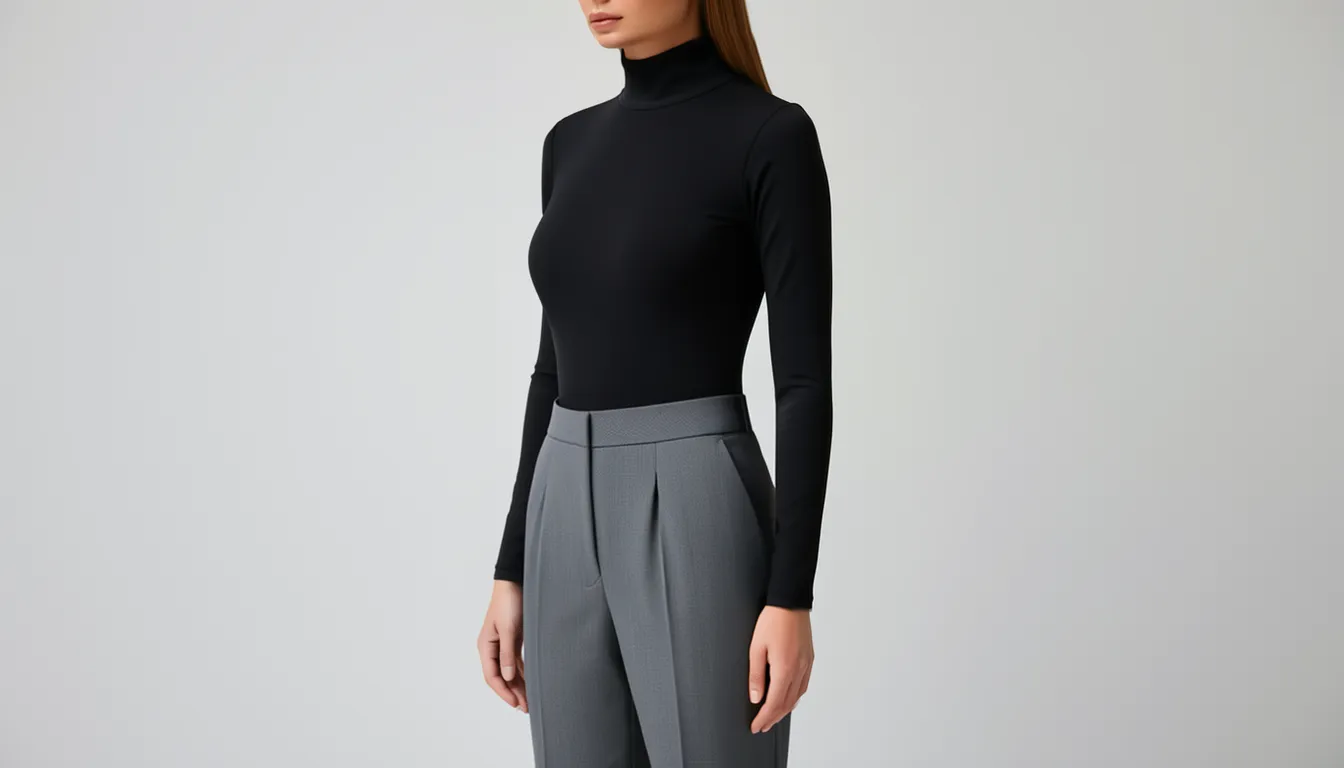
Sizing: why going down a size is the most expensive mistake
Buying a smaller size for more control is the single most common shapewear error, and it backfires mechanically rather than aesthetically. Pressure is force spread over an area, so shrinking the garment does not raise compression evenly — it concentrates it at the edges, where the fabric ends. That gives you three problems at once: a pronounced bulge above and below the panel, a garment that now actively wants to roll down, and the pressure concentration at the hip crease that the nerve-compression literature keeps pointing at. Firmer is not smoother. Correctly fitted is smoother.
For fashion bodysuits the sizing question is different, and it comes down to one measurement most size charts bury: torso length. Girth decides whether the garment fits your ribcage; the shoulder-to-gusset distance decides whether it is comfortable. A bodysuit that is one size too short in the body pulls at the shoulders and drags at the gusset all day, and the person wearing it will usually blame the size rather than the length. If you are long in the torso, size up rather than sideways — you lose a little closeness through the waist and gain a garment you forget you are wearing.
We grade our sizes for an international audience, which is why our labels carry triple sizing on the pieces where it matters — a bra listed as 32C|70C|S covers the US, EU and letter systems on one tag, so nobody converts anything. On bodysuits the letter run does the work, and the run we keep broadest is the everyday cotton one: S to 3XL. Where a style runs narrow — lace in particular, since each lace SKU tends to cover a couple of sizes — we would rather send you to a different fabric than to a size that will not work.
Durability and cost per wear
Elastane is the part of any stretch garment that dies first, and it dies faster under load. A compression fabric holds its elastane under near-constant tension every hour it is worn, so firm shapewear loses shaping power sooner than a fashion knit loses its shape — usually announced not by visible damage but by the garment quietly stopping working. Heat accelerates it: a tumble dryer, a radiator or a hot wash will cost you more elasticity in one cycle than a month of wear. This is why both categories carry the same care instruction, and why we repeat it — cool hand-wash, no fabric softener on elastane, dry flat and out of direct sun.
The economics follow from the wear pattern, and they are worth doing on paper before you spend. A €28.99 cotton bodysuit worn once a week for two years works out at around €0.28 per wear. A €60 firm shaper bought for a wedding and worn perhaps six times a year for two years is closer to €5 per wear. Neither number makes either purchase wrong — an occasion garment is allowed to be expensive per outing — but it clarifies what you are buying. One is wardrobe infrastructure. The other is event equipment.
| Fashion bodysuit | Shapewear bodysuit | |
|---|---|---|
| Pros | Wearable all day; visible as clothing; wide colour and fabric choice; breathable in cotton; low cost per wear; simple care | Genuine, visible silhouette change; smooths under bias-cut and clingy fabrics; targeted tummy and thigh control; built-in bra options; prevents thigh chafing |
| Cons | No shaping — it follows your shape rather than changing it; needs a bra above a B cup; a bathroom step at the gusset | Uncomfortable over long wear; displaces tissue rather than removing it; heat and breathability trade-offs; unregulated compression labels; loses power faster; high cost per wear |
| Best for | Everyday dressing, workwear, layering, a clean line under anything | Weddings, photographed events, one specific unforgiving dress |
Who should buy which
Four questions resolve almost every version of this decision. What outcome do you want — a smooth line, or a smaller measured outline? How many hours will you wear it? Will it be seen? And is this for one date in the diary, or for Tuesdays? Your answers point one way or the other with very little ambiguity.
Buy a fashion bodysuit if you…
- want a top that stays tucked and a clean waistline, rather than a changed outline
- will wear it for a full working day, on your feet or at a desk
- want the garment to be visible — colour, neckline and fabric are part of the outfit
- are building everyday wardrobe pieces rather than solving one event
- run warm, or already know that compression and your stomach disagree
Buy a shapewear bodysuit if you…
- need a visible change in silhouette for a specific outfit, most often a bias-cut or thin jersey dress that shows everything
- are dressing for a photographed occasion where the outline matters more than comfort for a few hours
- want thigh coverage to prevent chafing under a dress
- can buy your true measured size and accept the result it gives, rather than sizing down for more
Buy neither if you…
- are shopping to fix how your body looks to yourself rather than how an outfit sits. Neither garment does that job, and a shaper bought in that spirit tends to end up unworn in a drawer — this is the pattern we see most often in customer conversations.
- have reflux, IBS or a circulatory condition and were considering firm compression for daily wear
- actually need a better-fitting bra rather than either garment — the section below on what really smooths a line starts there for a reason
Where shapewear genuinely wins
We do not sell shapewear, so treat this as the section where we tell you what we cannot do. If your goal is a measurably smaller waist under a bias-cut satin dress in three weeks’ time, a fashion bodysuit will not deliver it — not in cotton, not in microfibre, not in any weight. Fabric with 8% elastane cannot produce the effect fabric with 28% elastane produces, and no amount of styling advice changes that. For that specific brief, a correctly sized firm shaper is the right tool and we would rather you bought one elsewhere than be disappointed by one of ours.
Three other cases belong to shapewear or to medical compression rather than to us. Mid-thigh shaping shorts genuinely solve thigh chafing under a summer dress in a way a bodysuit cannot reach — although a well-fitting boyshort in a smooth microfibre solves it too, at a fraction of the compression. Postpartum abdominal support can be useful, but the sensible route is a clinician’s recommendation rather than a size chart, since abdominal separation is a real thing that a generic garment can either help or aggravate. And post-surgical compression is not shapewear at all: it is prescribed by class, measured to the limb and dispensed against a standard, which is exactly the rigour the fashion category lacks.
One last piece of fairness. The shapewear market is real and growing — analyst estimates for 2026 range from roughly $2.5bn to $4.7bn depending on how the category is drawn, and bodysuits are the largest single format within it, at somewhere around a third of revenues. A market that size is not built on a garment that never works. It is built on a garment that works well for a few hours, for a defined purpose, and gets bought again for the next occasion.
The middle ground: what actually smooths a line without compression
Most people who reach for a shaper are chasing a smoother line, not a smaller measurement — and a smoother line is achievable with fit rather than force. In our experience of what customers come back happy about, the levers work in roughly this order of impact.
- The bra, first and by a distance. A band that actually anchors changes the whole torso line — where the bust sits, how long the waist reads, whether the back is smooth. The often-quoted figure that most women wear the wrong size is worth taking seriously here: a well-fitted moulded-cup microfibre bra 3014 at €19.99, sized properly anywhere from 32C|70C|S to 40D|90D|2XL, will do more visible good under a fitted top than any compression panel. Support comes from the band, not the straps — and if you have never checked your own, our guide to measuring your bra size at home takes five minutes and covers EU, US and UK conversion.
- The outer fabric. A matte, mid-weight or textured cloth conceals; thin shiny jersey reveals. Changing the dress is often easier than changing the underwear, and it is free.
- The bottom cut of the bodysuit. Leg-opening lines are the most common visible break in an otherwise clean outfit. A thong-cut bodysuit removes the line entirely under tight trousers; a Brazilian gives more coverage with a softer edge. Cut solves what compression cannot.
- Base-layer fabric. Microfibre with bonded edges disappears under fitted clothing; cotton breathes better but has a slightly more visible presence. Pick by outfit, not by habit.
- Colour matching to your skin, not to the outfit. Under white or pale fabric, a skin-tone base is invisible where white glows.
- Nothing bunching underneath. If you wear knickers under a bodysuit — plenty of people do, and it is entirely reasonable — a smooth microfibre G-string at €9.99 in XS–2XL keeps the layer count invisible. A cotton brief under a fitted bodysuit is the quiet cause of a lot of unexplained lines.
Put those together and the result is honest rather than dramatic: the same body, sitting cleanly under clothes, all day, with nothing to peel off in a restaurant bathroom. If you want to start somewhere cheap and see whether the approach suits you, this lighter sleeveless option at €22.99 is the least committal entry point in our range of women’s bodysuits, and it tells you within a day whether the format works for your wardrobe.
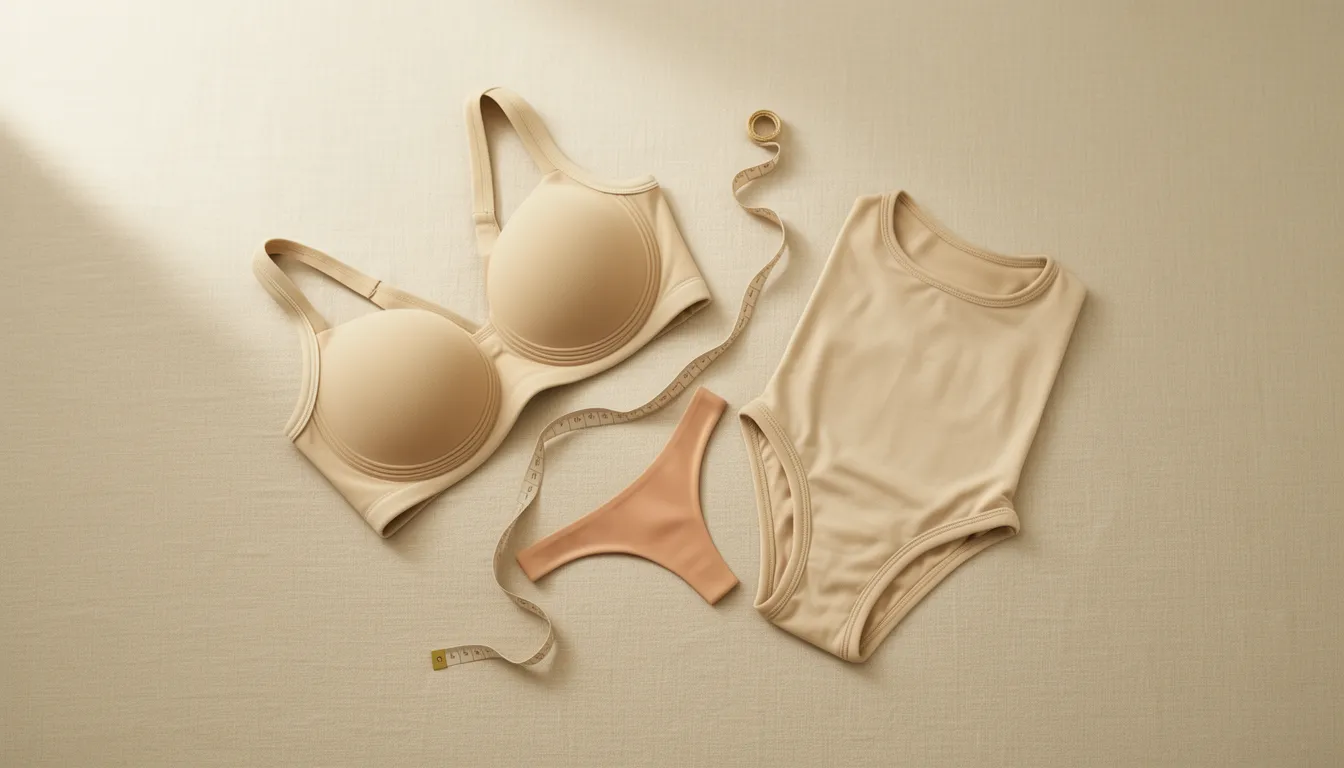
Five mistakes we see most often
- Buying a fashion bodysuit expecting it to shape. The most frequent mismatch of the two categories, and the one that produces returns. If a listing does not state compression fabric and panels, it is a top.
- Sizing down for more control. It concentrates pressure at the edges, creates the bulge it was meant to remove, and makes roll-down worse. Buy your measured size.
- Wearing firm compression for a twelve-hour day. Shapewear is event equipment. If you need something for every day, you need a different garment, not a tougher constitution.
- Ignoring the bra. A compression panel under a badly fitted bra fixes the least visible problem while leaving the most visible one in place.
- Tumble-drying either of them. Heat is what kills elastane. One hot cycle can cost a garment more recovery than a season of wear — the fastest way to make any stretch piece stop working.
The summary we would give a customer across the counter: choose by outcome and by hours. If you want to look tidy every day, buy the top — and if you want to know which one, our guide to choosing the right bodysuit walks through fabric and fit, while how to wear a bodysuit covers what to put with it. If you want a visibly different outline for one evening, buy the shaper, buy your true size, and take it off when you get home.
Fashion vs shapewear bodysuits: your questions answered
Is a bodysuit the same as shapewear?
No. A fashion bodysuit is a top that fastens at the gusset, cut in a fashion knit with roughly 5–12% elastane, and it follows your shape. A shapewear bodysuit is a compression undergarment built from power mesh or powernet with 20% elastane or more, often doubled into panels, and it changes your outline. They share a pattern shape and nothing else. A "shaping bodysuit" sits between the two — check the fibre content to see which side it really falls on.
Do fashion bodysuits give any tummy control at all?
Very little, and it is honest to say so. A fitted knit smooths the transition at the waistband and removes the untucking and bunching a normal top creates, which reads as a cleaner line. What it will not do is reduce a measurement. If a listing promises a cotton or light microfibre bodysuit will flatten your stomach, the fabric cannot support the claim — real hold needs elastane content a soft everyday knit does not have.
Can I wear a shapewear bodysuit as a top?
Sometimes. Pieces designed as outerwear — single-layer body, light compression, finished necklines — work fine. Traditional firm shapers usually give themselves away: control-panel edges, boning channels and silicone gripper bands print through light fabric, and the colour range is built for hiding rather than showing. A simple test: if the brand photographs it as a top, it was built as one. If every image shows it under something, it was not.
How many hours can you wear a shapewear bodysuit?
Treat firm compression as a few hours rather than a full day. The problems people report — reflux, bloating, thigh numbness, a bulge above the panel — cluster around long wear and sizing down, not around occasional correctly sized use. Mayo Clinic's guidance on shapewear puts moderation first. If you need something you can genuinely forget about from morning to evening, that is a fashion bodysuit, not a shaper.
Should I size up or down in a bodysuit?
Never down. In shapewear, a smaller size concentrates pressure at the edges instead of raising compression evenly — you get more bulge, more roll-down and more pressure at the hip crease. In a fashion bodysuit, size by torso length as much as girth: if you are long from shoulder to hip, size up rather than living with a garment that pulls at the shoulders and drags at the gusset all day.
Do I need to wear a bra with a bodysuit?
Above a B cup, usually yes. A built-in shelf is a convenience, not structural support, and we would rather say that than oversell it. Moulded-cup styles are the exception and can be worn on their own. Match the bra to the neckline — a T-shirt bra under a scoop, a strapless or a smooth style under a high neck — since bra choice does more for your line than any compression panel.
Is shapewear bad for you?
Not inherently. Occasional, correctly sized wear is mainly a comfort question for most healthy people. The documented issues come from pressure over time: tight waistbands can worsen reflux and heartburn, compound bloating in people with IBS, and press on the nerve supplying the outer thigh — meralgia paresthetica, which affects roughly 3–4 people per 10,000 a year and usually settles once the pressure is removed. If you have reflux, IBS or a circulatory condition, keep firm compression for occasions, and ask a clinician when pregnant or postpartum.